
MENU
The Whiteman Airport Land Use Study and Economic Analysis, released October 28, 2026, examines three possible futures for the county-owned general aviation airport at 12653 Osborne Street.
Commissioned by the Los Angeles County Board of Supervisors in 2024, the study evaluates the economic, environmental, and regulatory implications of maintaining, improving, or closing the 184-acre airport.
The report does not recommend a specific option.
One of the study’s central findings is that Los Angeles County cannot independently decide to close Whiteman Airport.
Because the airport has received federal funding for improvements, it is subject to obligations that require continued aviation operations unless the Federal Aviation Administration (FAA) authorizes a change.
The county would need federal approval before permanently closing the airport, reducing its operations, or converting the property to non-aviation uses.
These requirements could complicate redevelopment proposals and significantly extend the timeline for any closure.
The study evaluates three scenarios, ranging from improvements to the existing airport to complete redevelopment.
The first option would preserve Whiteman Airport’s existing footprint while replacing aging hangars and improving aviation infrastructure.
The airport would continue operating primarily as a general aviation facility.
The second scenario would maintain airport operations while introducing additional commercial development on available property.
Potential uses include:
The study estimates this approach could support approximately 1,933 jobs within 10 years.
Supporters argue that combining aviation improvements with commercial development could provide economic benefits without eliminating the airport.
The third scenario would close Whiteman Airport and transform its 184 acres into a mixed-use development.
Proposed uses include housing, healthcare offices, commercial space, technology businesses, and light industrial facilities.
The estimated demolition and redevelopment cost is $3.55 billion.
The study projects approximately 12,102 jobs at full development, potentially around 2075. It also indicates that realizing potential revenues could take up to 40 years.
This scenario would require FAA approval and involve the longest development timeline.
Safety remains a major concern for residents living near Whiteman Airport.
Several aircraft accidents since 2020 have intensified calls to reconsider the airport’s future.
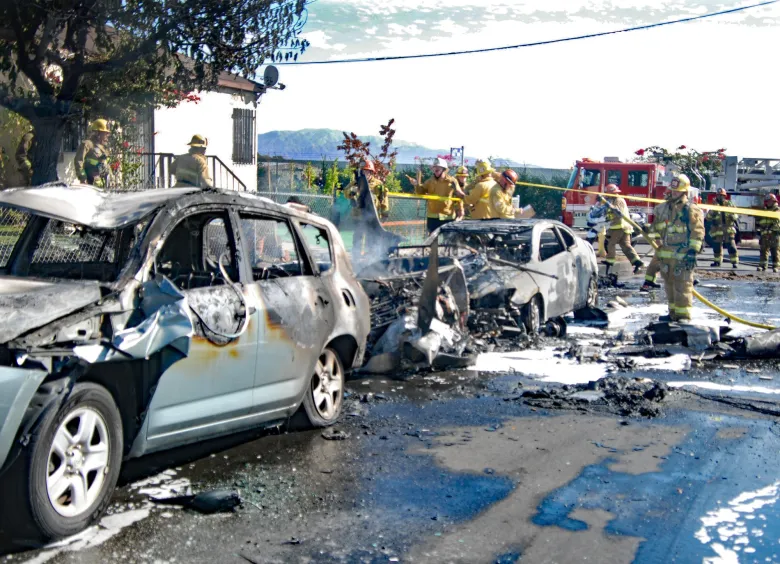
In November 2020, a plane approaching Whiteman struck power lines and crashed in a nearby residential neighborhood, killing the pilot.
Other incidents have included an emergency landing on Metrolink railroad tracks, a fatal crash near the 210 Freeway, and two accidents in 2026.
On April 20, 2026, a single-engine aircraft struck a power line before crashing into an auto parts store parking lot near residential properties. The pilot was hospitalized in critical condition.
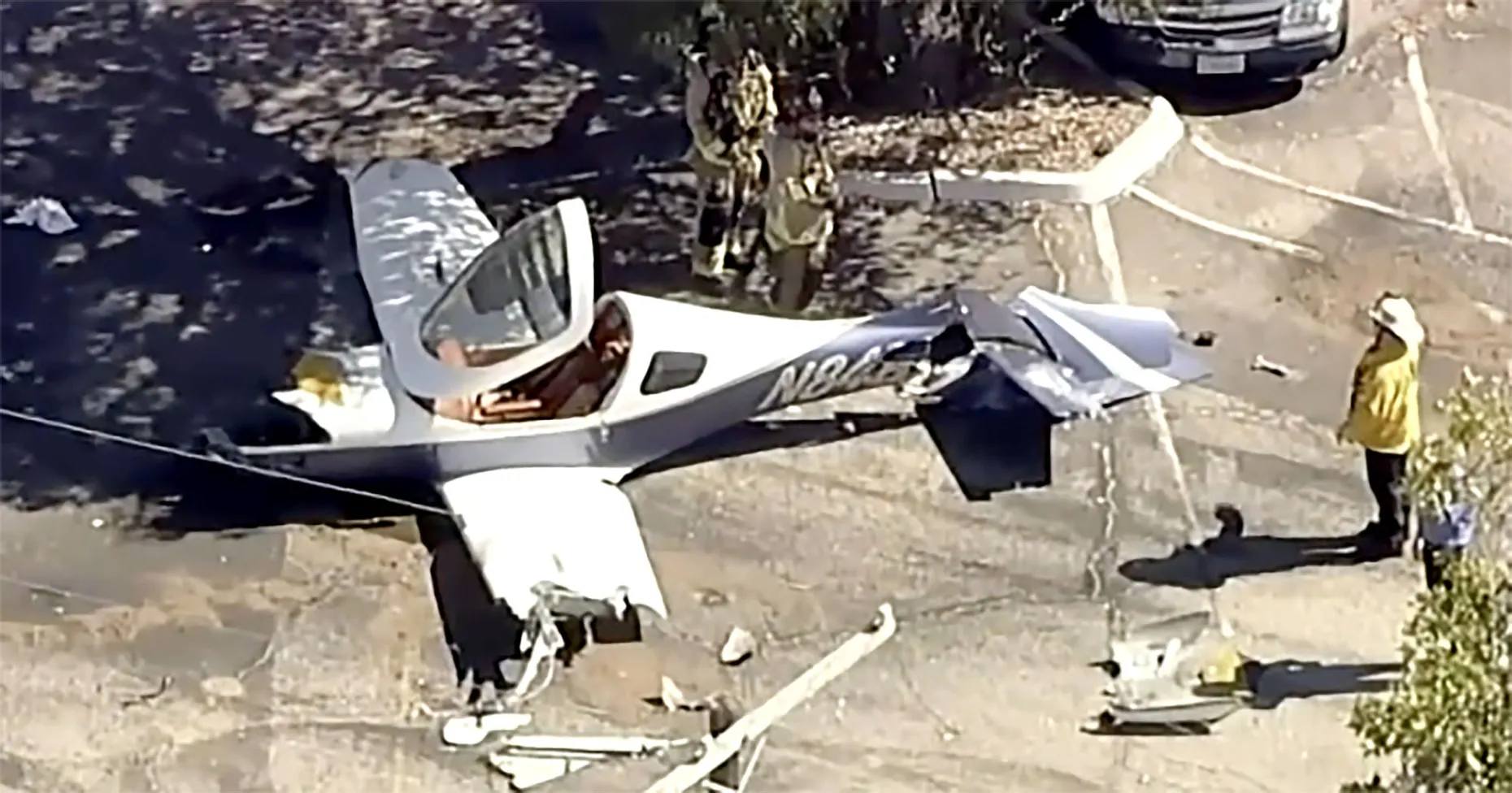
On June 16, another aircraft crashed during landing after its pilot failed to deploy the landing gear. The plane came to rest in an airport parking area.
The June incident marked at least the fifth aircraft accident associated with Whiteman Airport since 2020.
The study acknowledges that residents’ concerns about aircraft crashing into homes, schools, or other neighborhood locations are grounded in actual incidents.
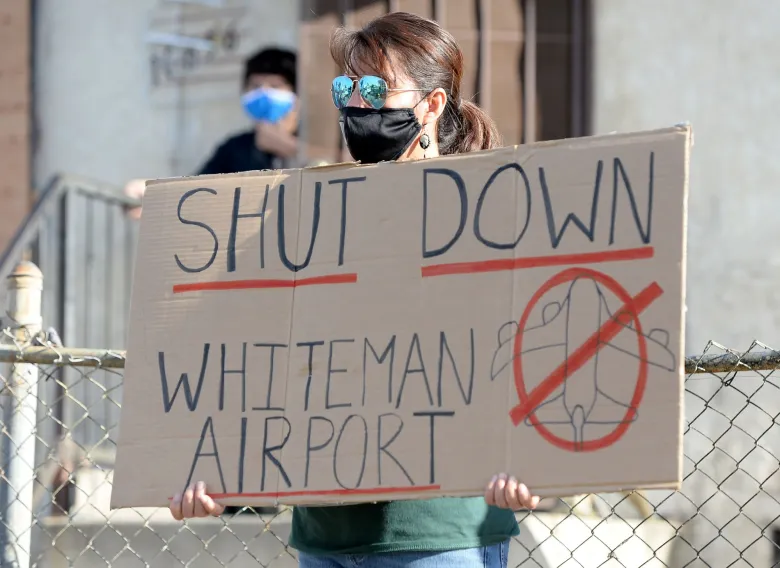
Community organizations have held protests and advocated for the airport’s closure.
The Whiteman Airport Coalition supports Scenario 2, which would preserve aviation operations while expanding commercial development opportunities.
Coalition representatives argue that the airport contributes to the regional economy and that county resources would be better directed toward modernization and safety improvements.
According to the study, Whiteman was the only one of Los Angeles County’s five county-owned airports to generate an operating surplus between 2022 and 2025, totaling approximately $1.1 million.
The Coalition has also questioned the approximately $2.1 million spent on the county’s study, particularly given the federal restrictions on airport closure.
Supporters have encouraged Los Angeles County to pursue additional FAA funding for infrastructure improvements.
They also maintain that recent aircraft accidents were associated with pilot error, operational circumstances, or mechanical problems rather than deficiencies in the airport’s runway or control tower.
Whiteman Airport supporters have cited its proximity to Los Angeles County firefighting aircraft as an important reason to preserve the facility.
However, the study clarifies that the county’s firefighting aircraft operate from Barton Heliport, a separate facility adjacent to Whiteman Airport.
According to the report, County Fire Department aviation operations do not depend on Whiteman’s general aviation activities and would not necessarily end if the airport closed.
Whiteman Airport is occasionally used as a staging area for firefighting aircraft.
Los Angeles City Councilmember Monica Rodriguez, whose district includes Pacoima, introduced a resolution in December 2020 calling for Whiteman Airport’s permanent closure.
The resolution cited neighborhood safety concerns and the potential to redevelop the property for housing and employment opportunities.
However, the Los Angeles City Council does not control the airport, which is owned by Los Angeles County and subject to federal aviation requirements.
In January 2022, the County Board of Supervisors directed departments to examine the implications of a potential closure.
The Board subsequently authorized the land use and economic analysis in 2024.
While discussions about the airport’s long-term future continue, Los Angeles County has introduced additional pilot safety measures.
A county-approved initiative advanced by Supervisor Lindsey Horvath established quarterly pilot safety seminars at Whiteman Airport.
The program began July 27, 2026, and is intended to reinforce safe aviation practices.
The Whiteman Airport Coalition supports the safety education initiative.
The newly released study provides Los Angeles County officials and community members with a framework for evaluating Whiteman Airport’s future.
The findings highlight significant differences in cost, job creation, development timelines, and federal approval requirements among the three scenarios.
For Pacoima residents, the discussion continues to center on neighborhood safety, economic opportunity, housing, and the long-term use of the airport property.
For airport supporters, the study reinforces arguments for preserving aviation operations while investing in modernization and additional commercial activity.
No final decision to close or redevelop Whiteman Airport has been announced in the information presented in the study. Any proposed closure would require further county action and federal review.